Comparisons & Decision Guides
Multi-Generational Fire Pit Comparison: Family-Safe Heat
29th May•12 min read
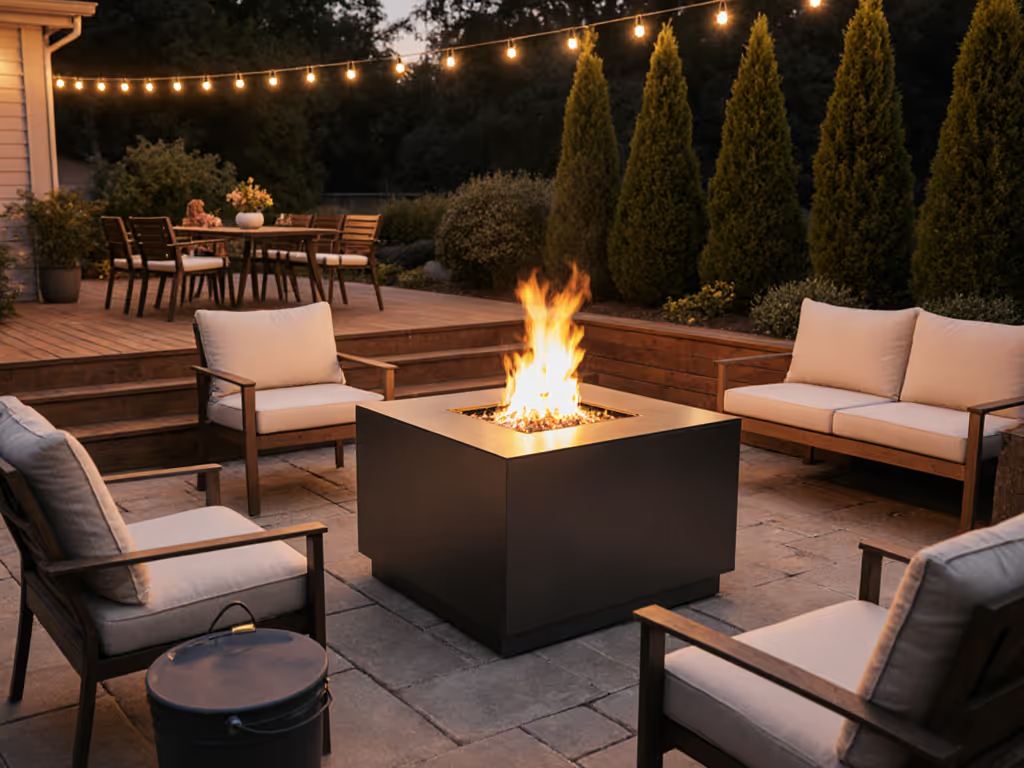
When planning backyard gatherings with little ones running about, understanding family fire pit heat distribution becomes essential, not just for comfort, but for safety. After years of mapping thermal comfort in backyard settings, I've discovered that a thoughtful child-safe fire pit comparison reveals clear patterns in how different models create safe zones for curious hands and wandering feet. Let's explore the heat dynamics that keep laughter flowing without the anxiety of accidental burns.
At a recent neighborhood gathering, I noticed children instinctively hovering just beyond where adults felt comfortably warm. This isn't coincidence: it's thermal awareness. Children's thinner skin makes them more sensitive to radiant heat, yet their curiosity often overrides caution. A well-designed fire pit creates distinct heat zones: a warm conversation area where adults can relax, and a cooler perimeter where children can safely play. For broader protocols on supervision, emergency prep, and child-specific precautions, see our complete fire pit safety guide.
Comfort is calibrated: distance, height, flame, and mindful hosting.
The key insight? Heat doesn't distribute evenly. Different fire pit designs create varying thermal maps, with some models generating "hot spots" that aren't immediately obvious until someone gets too close. Understanding these zones helps you choose equipment that naturally creates safer boundaries without constant supervision.
Shallow fire pits (6-12 inches deep) distribute heat outward more broadly, creating a wider warm zone but with less intense vertical heat. This design often works better for child-friendly setups because:
The Ovios Furniture research confirms that shallow pits provide better outward heat distribution, making them ideal for smaller backyard fire pit gatherings where children might be present.
Deep fire pits (12-24 inches deep) concentrate heat upward, creating a stronger vertical thermal column. While they're excellent for wind protection and larger gatherings, they pose specific challenges:
For families, I generally recommend the 10-14 inch depth range as the sweet spot for balanced visibility and safety (deep enough to contain sparks but shallow enough to maintain clear sightlines).
Your fuel choice dramatically affects heat distribution and safety:
Wood-burning pits create variable heat with radiant warmth coming from both flames and heated mass. BTU output ranges from 30,000-80,000 depending on size, with larger pits generating more ambient heat. The challenge: unpredictable heat spikes during log shifts or flare-ups that children can't anticipate.
Propane/natural gas pits offer more consistent heat output (typically 40,000-60,000 BTU for small-medium units), with heat radiating primarily from the media (lava rock, fire glass) rather than open flames. The controlled burn creates more predictable thermal zones, critical for child safety.
Bioethanol produces the cleanest flame but minimal radiant heat, making it less ideal for functional warmth despite its safety advantages.
The Montana Fire Pits research shows that gas pit surfaces can reach 200-250°F on the top ledge, hot enough to cause burns in seconds. This is why the choice of fire pit media becomes crucial for managing surface temperatures.
What you place in your fire pit dramatically affects heat distribution and safety margins:
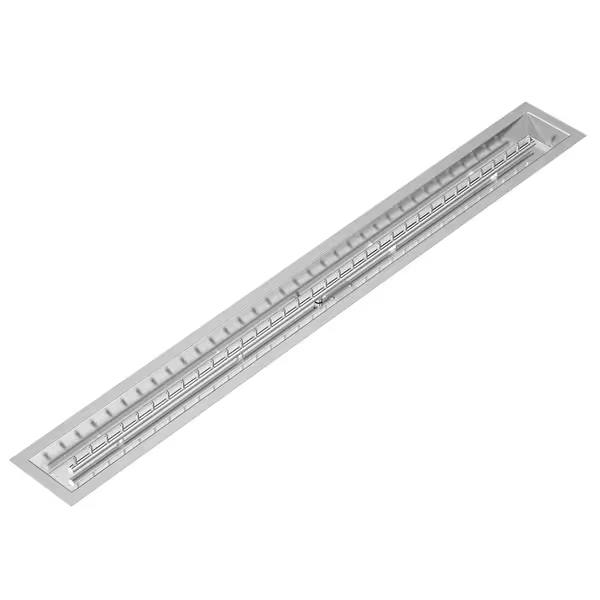
Lava rock outperforms other media for family settings because:
Fire glass offers beautiful visuals but presents challenges:
Starfire Direct's research confirms that 2-inch layers of properly sized fire media create optimal heat distribution. For maximum safety, I recommend mixing lava rock as a base layer with a thin top layer of fire glass, which provides the visual appeal families want while maintaining the thermal buffering children need.
Round fire pits create the most uniform heat distribution, critical for child safety. If you're deciding between shapes, our rectangular vs round heat comparison shows how form changes warmth zones and hosting dynamics. Unlike rectangular models that can create hot spots at corners, the curved design of a round fire pit creates a more consistent thermal gradient around the perimeter.
Size considerations:
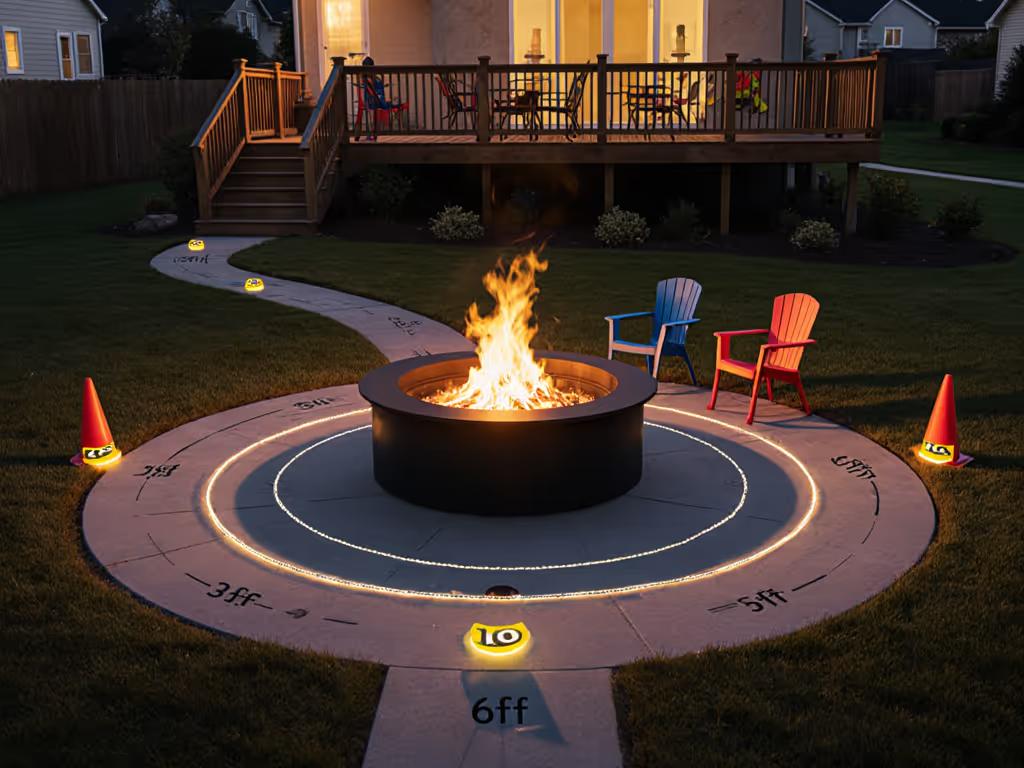
The Outback Landscape research confirms that 3-foot wide pits are ideal for intimate settings where safety monitoring is paramount. Larger pits demand additional safety measures like perimeter markers or heat deflectors to create clear boundary zones.
Contrary to popular belief, height significantly impacts child safety:
I recommend avoiding fire pits that exceed 14 inches in height for primary family gathering areas. This "quiet-host ethos" adjustment creates natural supervision advantages, because when you're seated at conversation height, you can better monitor children's movements relative to the heat zone.
Rather than relying solely on verbal warnings, implement physical zone markers: To choose effective deflectors, screens, and guards, start with our fire pit accessories comparison.
Montana Fire Pits research shows that proper spark guards significantly reduce top ledge temperatures by deflecting heat away from the rim, a critical consideration for curious hands that might test boundaries.
Make cozy feel effortless by implementing these stepwise tweaks:
Remember my backyard movie night experiment? We lowered the flame, lifted the pit, and added a simple screen: jackets came off, conversations got easier, and the dog stopped circling. The same principle applies here: small adjustments to your heat dynamics create significantly safer, more comfortable gatherings.
For reference benchmarks on safe warmth radius by pit type, see our heat pattern data study before you map your own setup. Tonight, when your fire pit is burning, grab a simple infrared thermometer (even smartphone models work) and take readings at 6-inch intervals outward from the edge. Note where temperatures drop below 100°F. This is your natural safety perimeter. Adjust your seating and play areas accordingly, then repeat after implementing one of the tweaks above. This sensory cue approach transforms guesswork into measurable comfort, ensuring your backyard fire pit becomes a space where both adults and children can relax without worry.
By focusing on thermal comfort zoning rather than just raw BTUs, you'll create gatherings where safety operates quietly in the background, exactly where it belongs in thoughtful hospitality. When you tune your heat system intentionally, hosting becomes effortless, and everyone stays comfortable longer.
Make cozy feel effortless.