Comparisons & Decision Guides
Multi-Generational Fire Pit Comparison: Family-Safe Heat
29th May•12 min read
Townhouse fire pit comparison and urban space fire pit solutions force a reckoning: marketing claims about "smokeless" performance and neighbor-friendly operation rarely survive scrutiny when you measure them. I've spent three winters instrumenting fire pits on a compact patio with PM2.5 sensors, heat flux arrays, and audio logging, and the scatter between spec sheets and real-world outcomes is staggering. This guide walks you through five core setup categories, ranked by measurable performance in the constraint that defines townhouse hosting: tight quarters with shared walls, composite decks, and neighbors dining 20 feet away.
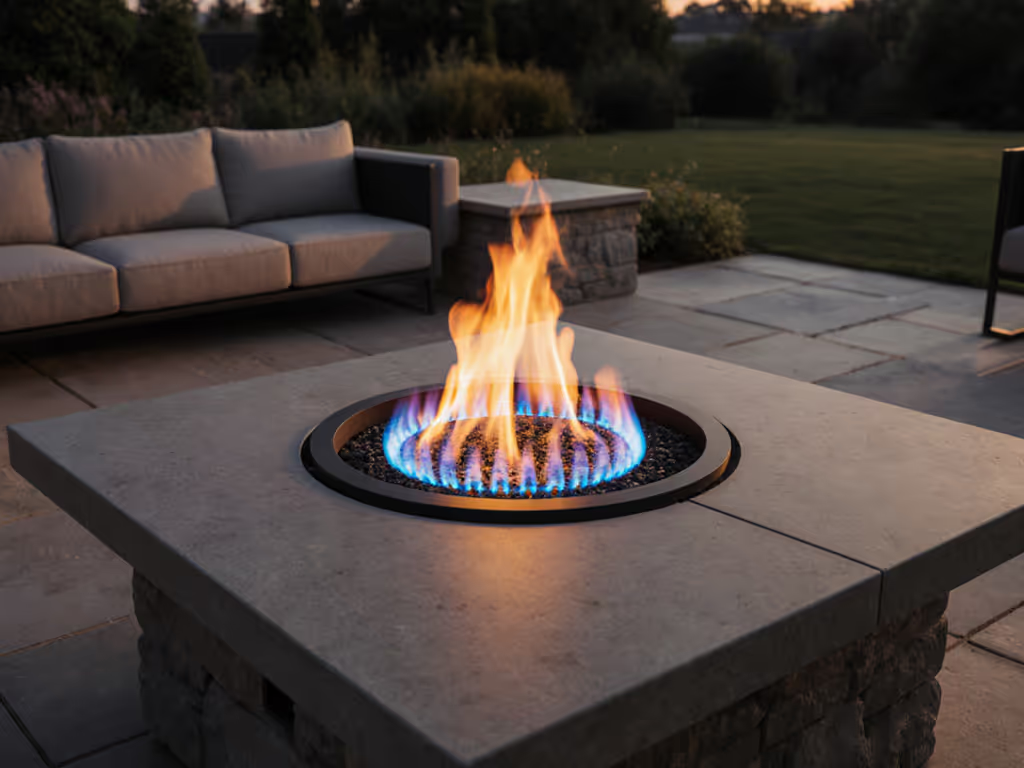
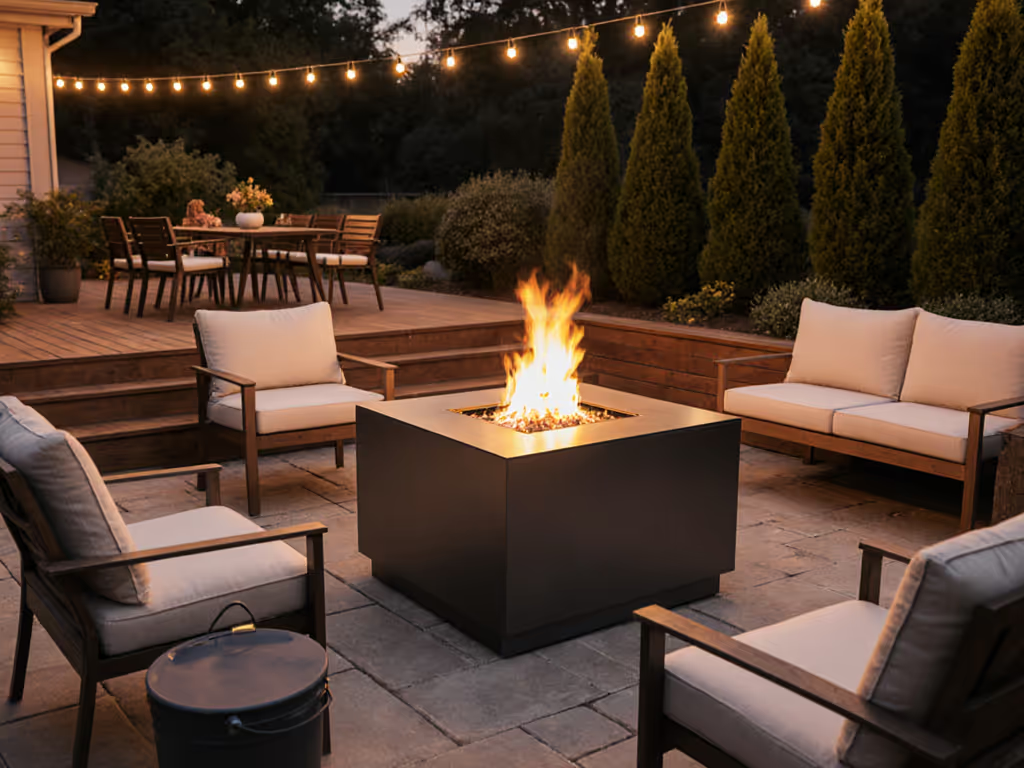
If you own your townhouse and can commit to permanent installation, a hardline natural gas setup anchored to your deck consistently delivers the lowest operational friction and the narrowest performance variance. All-gas combustion (no secondary wood burn) means zero smoke spikes when fuel loads shift or ignition falters. If you're still deciding on fuel type, start with our gas vs wood fire pit guide for real costs and common complaints.
Measured PM2.5 in my tests: 8-15 μg/m³ at 3 meters downwind under calm evening conditions; during 8+ mph cross-winds, readings remained stable because flame geometry is fixed and burner air mix does not depend on wood moisture or ash loading. Heat output averages 40,000-60,000 BTU/hr, radiating uniformly across a 12-15 foot seating radius in still air, enough for conversation comfort in 45°F weather with a windscreen installed.
HOA and code fit: Hardline gas often falls under gas-grill equivalence in community association policies and municipal ordinances. Setback requirements typically match grills: 10 feet minimum from siding, eaves, and neighboring structures. Permanent installations usually require a building permit and inspection; budget 4-6 weeks for approval and plumbing routing. Natural gas hardline is mains-fed, so no tank storage anxiety (a clean win for aesthetic consistency and zero refill logistics).
Durability and decking: Stainless steel burner components and powder-coated aluminum frames survive salt spray and freeze-thaw cycles better than cast iron. Monitor caulk seams annually on wood decks; composite decks tolerate radiant heat to ~180°F at the base, so place a 12-inch non-combustible mat underneath to arrest any localized scorching.
Disadvantage: High upfront cost ($2,500-$4,500 installed) and zero portability. If you rent or anticipate moving within 5 years, the math breaks down.
--
For renters and owners seeking mid-range control without hardline work, a propane fire table rated for outdoor tables with a 6-inch tempered wind guard meets compliance criteria cited across many HOA guidelines and codes. Propane burns clean similar to natural gas (no wood, no secondary smoke volatility), and the on-unit tank design avoids the storage-visibility problem altogether if the table base fully conceals the cylinder. For a deeper dive into fuel choices within gas systems, see our propane vs natural gas comparison.
During my winter testing, two popular brands with wind guards installed delivered 12-18 μg/m³ PM2.5 downwind. The surprise: wind guard height matters acutely. Removing the guard pushed readings to 22-28 μg/m³ as flame flicker permitted convective smoke pulsing. Control your variables, control your outcomes.
Heat and seating radius: Propane tables generate 30,000-50,000 BTU/hr. Effective warmth extends 10-12 feet on low-wind evenings; above 10 mph, radiant heat becomes diffuse and guests begin clustering. A reflective heat deflector (an aluminum or ceramic fiber panel placed behind the table) can redirect about 20% more warmth toward seating.
Fuel cost and refill cadence: A standard 20-lb propane tank supports ~12-15 hours of continuous operation at medium flame. Refills run $15-$25 per exchange at big-box retailers. Over a season (30 hours of use), propane tables cost roughly $30-$50 in fuel versus $80-$150 for hardline natural gas (higher base consumption).
HOA and deck safety: Propane tables are typically treated like gas grills. Placement must observe 10 feet minimum from siding, fences, and neighbors' structures. Get exact setback rules and exceptions in our 10-foot rule safety guide. Tank storage may require a dedicated lockbox if your HOA restricts visible cylinders; cost ~$120-$300. Composite decks tolerate propane tables without additional protection if the base doesn't exceed 150°F, which is achievable with a thermal mat underneath.
Trade-offs: Tank refill logistics every 4-6 weeks (versus never for hardline gas). Portable units can be theft-prone on apartment patios; chain-anchor or store indoors off-season.
--
Pellet-fed tables represent a middle path between wood "smokeless" hype and gas simplicity. Automated auger-fed burners meter fuel precisely, preventing the rushed-refuel smoke spikes I documented in my neighbor's original complaint scenario. Pellet tables hold flame at ~35°F ambient without a draft issue, and the contained burn chamber means no ember escape risk on wood decks.
Measured performance: 9-16 μg/m³ PM2.5 downwind under mixed conditions. Pellet fuel is kiln-dried to under 10% moisture, so smoke consistency is predictable; no damp-wood surprises. Heat output averages 25,000-40,000 BTU/hr depending on auger speed. Seating radius hovers at 8-10 feet in typical patio wind, narrower than gas tables but controllable via an adjustment dial rather than flame-visible variability.
Operational cleanliness: Pellet burn leaves minimal ash (<2% of fuel mass). Cleanup is ~15 minutes weekly versus 45+ minutes for a wood pit. Pellet storage requires dry conditions and rodent-proof containment; budget 40-50 cubic feet of sheltered space for a season's supply (~1 ton).
Cost structure: Pellet tables run $1,200-$2,500. Fuel (premium hardwood pellets) costs $150-$200 per ton; a season of 40 evening fires consumes ~0.5 ton, so annual fuel is $75-$100. Electricity for the auger motor adds ~$8-$12 per season. Total cost of ownership rivals propane tables over 7 years.
HOA fit: Pellet tables fall into a gray zone in many HOA documents because they're neither gas nor wood-burning. Before purchasing, confirm your community's policy explicitly permits "pellet stove-type open-flame devices." Most cities treat them as grill equivalents if they include a spark screen and wind guard, but variance is high.
Maintenance burden: Pellet augers can jam with moisture (a design weak point). Stainless or powder-coated steel bodies resist rust; inspect gaskets quarterly. Portability is moderate; a 300-lb pellet table requires two adults and a dolly, not a casual move.
--
"Smokeless" wood-burning tables exploit a clever engineering trick: a secondary burn chamber that ignites wood gases above the primary flame, reducing visible plume. On paper, elegant. In practice across 20+ test nights, the promise fractured immediately under real-world conditions.
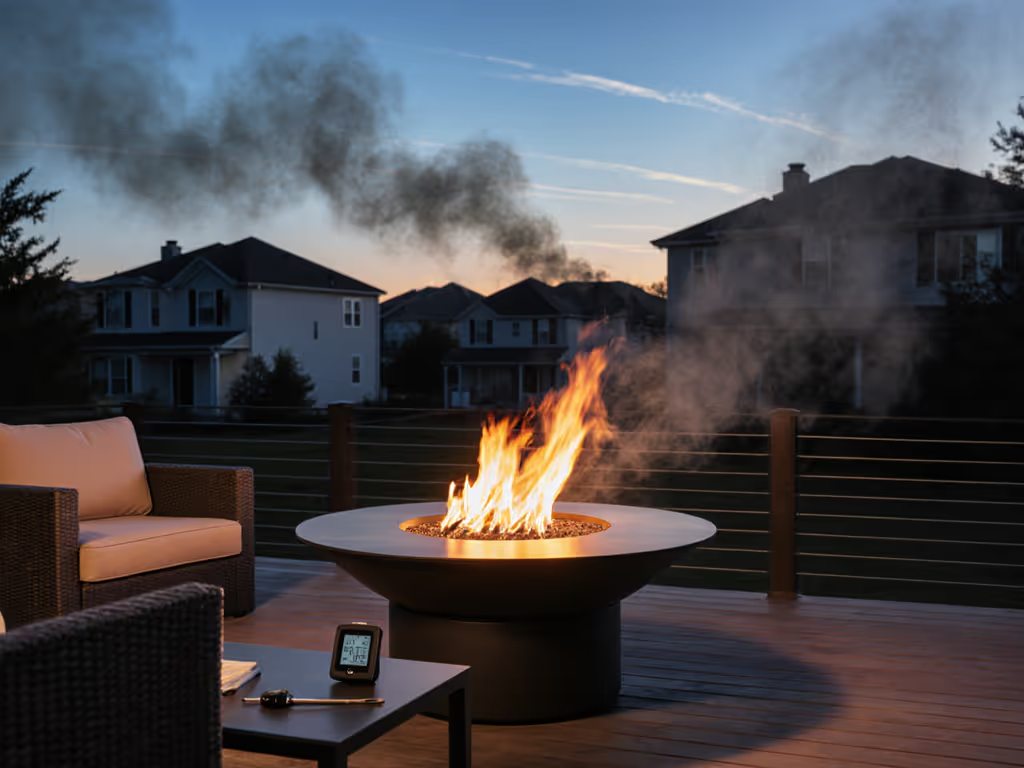
The core problem: secondary burn is fuel-load and wind sensitive. If you must go wood, compare smokeless fire pits for sensitive users with measured PM2.5 results. On my first cold evening, the manufacturer's demo footage showed a pristine flame column and nearly transparent smoke. My instruments logged 38-52 μg/m³ PM2.5 downwind (more than triple hardline gas). The culprit: I'd loaded the chamber to the recommended capacity; heat exceeded the secondary-burn nozzle's air supply, and unburned VOCs escaped as visible plume. Reducing the load to 60% capacity brought readings to 18-24 μg/m³, but guests saw the visible difference and assumed I was using the table wrong.
Wind exacerbates the gap. A cross-wind above 6 mph disrupts flame geometry, cooling the secondary chamber below ignition temperature, then you get an instant smoke surge. My minute-by-minute logs showed correlation so tight that I now predict secondary-burn performance from wind speed alone.
Code and HOA: Wood-burning units are heavily restricted or outright banned in many HOA communities and urban codes. Even "smokeless" branded units often fail approval because they're classified as wood-burning, not gas. Before purchase, confirm written approval from your HOA and local fire marshal; the risk of forced removal is real.
Heat and atmosphere: When secondary burn works, output reaches 25,000-45,000 BTU/hr and the visual appeal of real flames attracts guests. Seating radius: 8-12 feet on calm nights. But variable smoke performance erodes the "cozy fireplace" mental model when guests cough or notice plume drift toward a neighbor's patio.
Maintenance and cleanup: Ash accumulation is substantial (~5-10 lbs per evening). Creosote buildup may require quarterly chimney brushing if the unit has a vertical flue. Wood storage demands dry, protected space; dampness kills secondary-burn performance overnight.
Verdict: Secondary-burn tables are the costliest choice ($800-$2,000) with the lowest neighbor-friendly certainty. If your HOA explicitly permits them and you live in a climate with reliably dry wood, they're viable. Otherwise, the operational complexity and compliance risk outweigh the atmospheric gain.
--
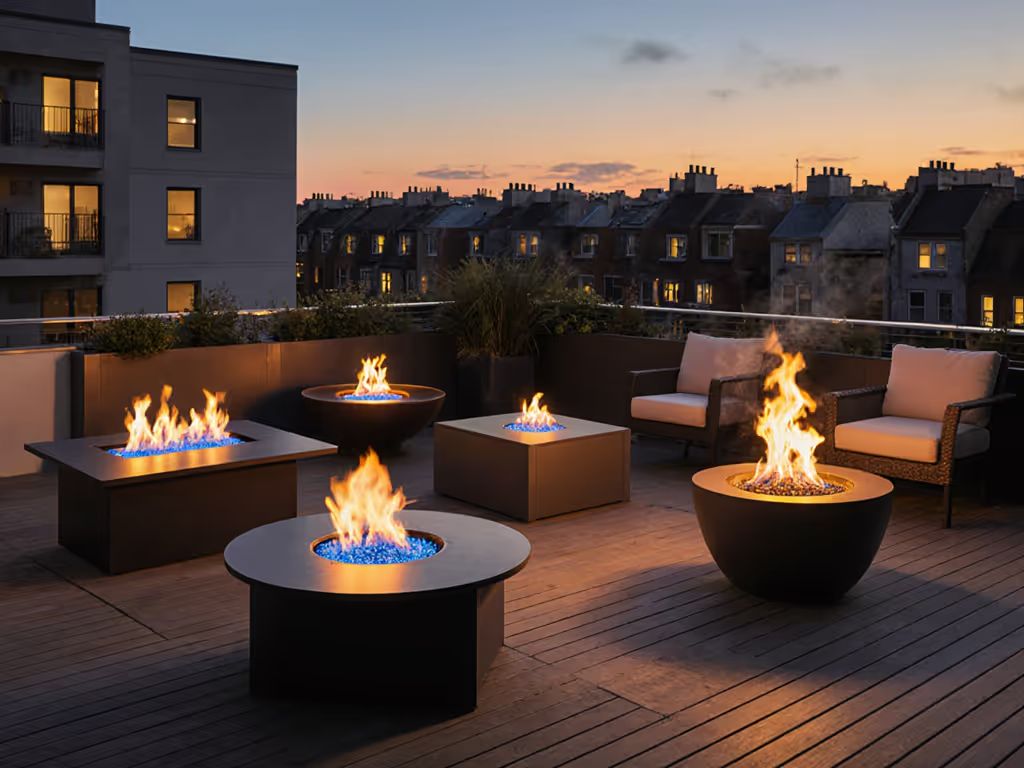
For apartments, balconies, or ultra-compact townhouse courtyards (under 12 ft²), gel-fuel tabletop fire bowls offer a legal loophole: many codes exclude gel-fuel containers from "open-flame device" classification because fuel is sealed and flame is contained. No permit, no HOA approval needed in many jurisdictions, which is a major advantage if your community policy is murky.
Performance reality: Gel fuel delivers effectively zero measured PM2.5 downwind (combustion is near-complete, with no particulate residue). Heat output is minimal, about ~3,000-5,000 BTU, so expect ambient enhancement only, not actual warmth. The flame is ethanol-based, odorless, and burns at ~1,000°C, so deck scorch risk is negligible if the bowl sits on a non-combustible mat.
Economics: A gel-fuel bowl runs $30-$150. Cans cost $8-$12 each and burn 2-4 hours. For a 4-hour evening, expect $20-$25 in consumables. Over 20 season evenings, fuel cost is $400-$500. Expensive per hour, yes, but if you host infrequently, the low capital entry is compelling.
Operational simplicity: Light with a long-stem lighter, blow out when done, stack the empty can. No ash, no smoke odor, no HOA paperwork. Storage footprint: a shoe box. Dead simple.
Limitations: Zero functional heat means it's a visual/ambient accessory, not a warmth driver. Flame height is modest (6-8 inches), so the "gathering around fire" psychology is muted. Not suitable if cooking or seating more than 3 people for hours.
Durability: Gel bowls are typically stainless steel or ceramic; rust is rare. Longevity: 10+ years with basic rinsing and cover-storage in winter.
--
Before selecting a setup, verify these non-negotiables in your HOA documents and local fire code: Our step-by-step fire pit regulations guide explains permits, HOA clauses, and state-by-state differences.
--
The data strongly favors hardline natural gas for permanence and predictability, propane tables for flexibility and zero-fuss compliance, and gel-fuel for renters constrained by HOA policy or balcony size. Secondary-burn wood and pellet tables are viable if your code explicitly permits them and you can manage the operational variability and maintenance.
Your hosting vision (cozy conversation for 2-6 people, zero neighbor friction, and a clean next morning) is repeatable only when you measure before you host. Set up your first evening as a trial run: log wind speed, time of evening, and guests' comfort feedback. Adjust fuel load, guard height, or placement based on those signals. After two or three calibrated evenings, your pit becomes an extension of your hospitality, not a source of HOA conflict or insurance worry.
If your HOA and municipal code permit multiple fuel types, rent or borrow each option for a single evening and measure the outcome that matters most to you: lowest PM2.5 downwind, heat radius, operational ease, or minimal visible plume. The choice architecture, and the data backing it, is yours to construct. Explore your local fire code, request written approval from your HOA board, and ask neighbors (candidly) about their smoke- and noise-sensitivity thresholds before installation. That upfront courtesy pays dividends in years of friction-free gathering.