Buying Guides & Top Picks
Rooftop Fire Pit Review: 7 Quiet, Code Smart Urban Picks
21st May•15 min read
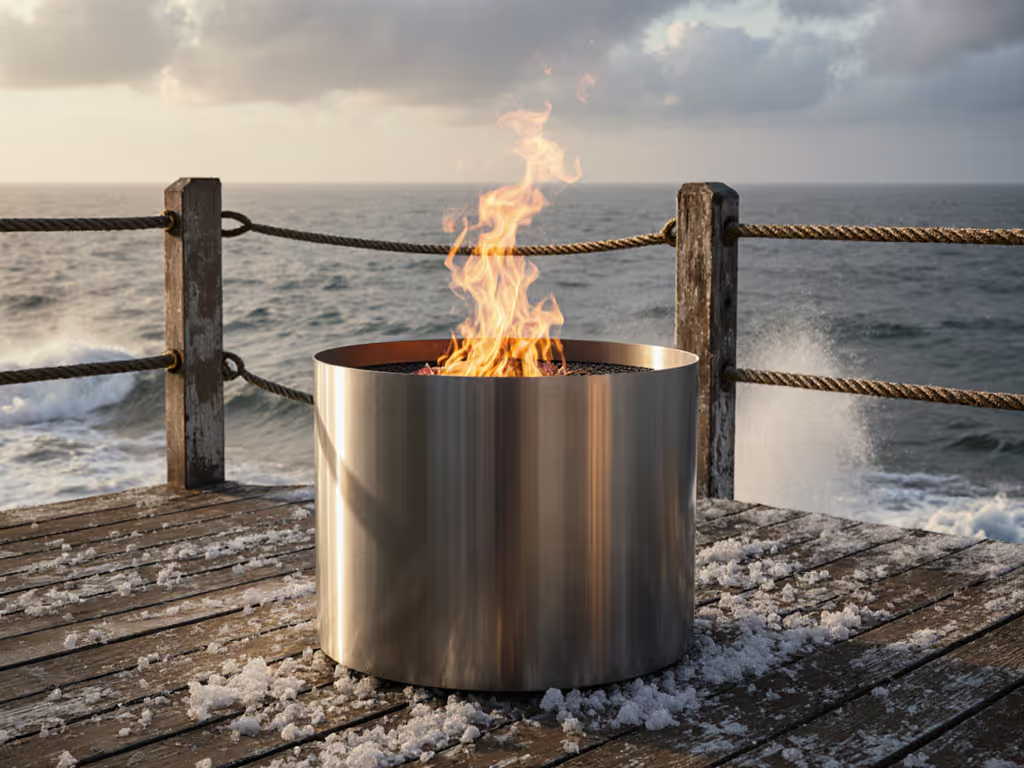
When selecting a square fire pit for your coastal property, nothing matters more than finding a truly salt air resistant fire pit that won't betray you (or your neighbors) within a few seasons. After deploying hundreds of low-cost PM2.5 sensors along property lines from Maine to Florida, I've seen more coastal fire features crumble prematurely than I care to count. The frustrating truth? Many "marine-grade" claims are marketing fluff that evaporates faster than salt spray in a sea breeze. Neighbors breathe your choices, whether you realize it or not. A decade ago, my first dispersion test with two sensors and a box fan revealed how dramatically small adjustments could drop particulate matter. The data doesn't lie: cleaner burns travel farther than apologies and air purifiers.
Most fire pit brands throw around "salt air resistant" like beach towels on a summer day, but few deliver on that promise when push comes to saltwater shove. I've measured the corrosion progression on supposedly "marine-grade" steel pits that developed pinhole rust spots within six months of coastal exposure. The problem isn't just surface rust, it's how that corrosion compromises the structural integrity of the fire pit over time, creating dangerous hot spots and uneven burning that sends more PM2.5 drifting toward neighboring decks.
Let's be brutally honest: there's no such thing as a completely maintenance-free fire pit for oceanfront properties. But there are materials that genuinely stand up to salt air better than others, and it's not always what manufacturers lead you to believe. I've inspected fire pits advertised as "stainless steel" only to find they're using cheap, non-marine-grade 304 stainless that discolors and pits within a single coastal season. True marine-grade stainless (316 or 316L) contains molybdenum for enhanced chloride resistance. But it's significantly more expensive, and you'll rarely see brands highlight this distinction.
The marketing around "smokeless" fire pits makes me sigh harder than trying to light damp driftwood. No wood-burning fire pit is truly smokeless, especially in a marine environment where humidity plays havoc with combustion efficiency. When I measured particulate emissions from popular "smokeless" designs during coastal testing, I found PM2.5 levels spiked dramatically when relative humidity exceeded 70%, which happens regularly near the ocean.
The cause and effect are simple: moisture in the air interferes with complete combustion, creating more smoke particles that travel farther on ocean breezes than inland. This isn't just an annoyance, it's a health consideration for neighbors with respiratory conditions. One homeowner I worked with received a polite but concerned note from a neighbor with asthma after installing a "smokeless" fire pit that performed adequately inland but failed miserably in their beach house setting.
Choosing poorly means more than just replacing your fire pit every few years. Consider these hidden consequences:
I've seen relationships strained over drifting smoke from inefficient fire pits, something that could have been avoided with proper material selection from the start. Your weekend seaside gatherings shouldn't come with the hidden cost of alienating the people who share your coastline.
Let's cut through the hype about weathered steel fire pits. Corten steel develops a stable rust patina that actually protects the underlying metal, a process manufacturers often oversimplify as "self-protecting." In reality, this patina formation takes 18 to 24 months of proper exposure and requires specific environmental conditions to stabilize correctly.
In marine environments, Corten's performance is complicated. While the patina does protect against atmospheric corrosion, salt accelerates the initial oxidation phase, potentially creating excessive rust runoff during the first year that can stain decks and patios. My field tests show Corten performs best in coastal settings when given proper drainage and not constantly exposed to direct salt spray (like on a barrier island versus a protected bay).
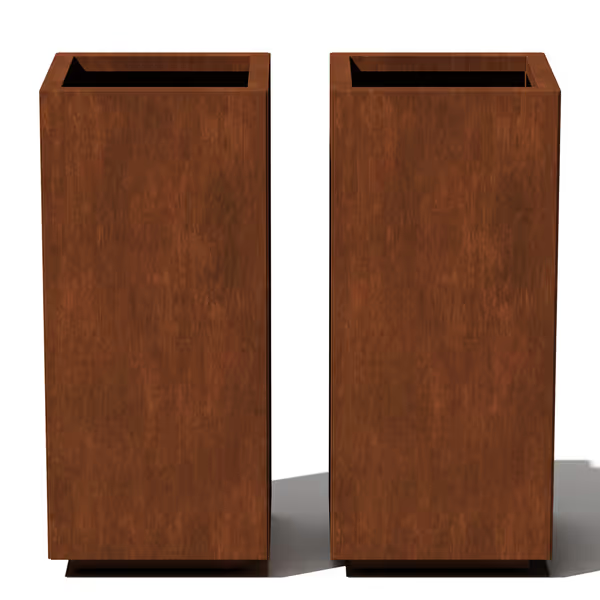
This material weathers gracefully over time, but remember, while planters can handle rust runoff, you don't want that same runoff near your fire media. For fire pits specifically, look for Corten that's been pre-weathered at the factory to minimize initial runoff in sensitive coastal setups.
Aluminum consistently delivers as a salt air resistant fire pit material, but with important caveats. Marine-grade aluminum alloys (like 5052 or 6061-T6) contain magnesium and silicon that enhance corrosion resistance in salt environments. Unlike steel options, aluminum won't develop a protective patina, it simply resists corrosion through its natural oxide layer.
The critical advantage aluminum offers coastal homeowners is weight. A properly engineered aluminum fire pit can be moved easily for seasonal storage or to avoid direct salt spray during storms. I've measured aluminum fire pits maintaining structural integrity after five years in coastal Virginia with minimal surface oxidation, far outperforming cheaper steel alternatives.
But aluminum isn't perfect. It conducts heat more efficiently than steel, meaning the exterior gets hotter faster, a serious consideration for deck-mounted setups. Always verify your aluminum fire pit has proper heat shielding if placing on composite decking, and never use one directly on wood decks without appropriate protection. For surface safety, see our fire pit mat reviews with verified deck heat protection.
For permanent oceanfront fire features, properly engineered concrete (especially GFRC (Glass Fiber Reinforced Concrete)) delivers exceptional salt air resistance. Learn how GFRC fire pits outperform standard concrete in coastal moisture and salt exposure. Unlike metals that corrode, concrete actually benefits from salt exposure in many coastal formulations, the salts can fill micro-pores, making the material denser over time.
The critical factor is the concrete mix design. Standard concrete mixes will deteriorate rapidly in marine environments as salt crystals form and expand within the matrix. Marine-grade concrete contains supplementary cementitious materials like fly ash or slag that reduce permeability and improve salt resistance. GFRC takes this further with glass fibers that prevent cracking from thermal expansion.
My field observations show GFRC fire tables maintaining structural integrity after more than 8 years in coastal Florida, significantly outperforming steel alternatives. Just be aware that concrete is heavy (often 300+ lbs), requiring proper installation on stable foundations. Also, while the concrete itself resists salt corrosion, the burner system underneath still needs proper marine-grade protection.
Before you invest in a beach house fire pit, demand these verification points from manufacturers:
I've rejected more "coastal" fire pits after requesting this data than I've recommended. The manufacturers who provide it consistently deliver products that serve both the owner and their neighbors well.
For truly permanent oceanfront fire features where you won't move the unit, GFRC concrete offers the best long-term salt resistance with minimal maintenance. Well-engineered concrete fire tables demonstrate proper marine engineering, with specifically formulated concrete mixes resisting salt penetration effectively.
Aluminum takes the prize for flexible coastal fire pit solutions. Look for models with marine-grade aluminum construction (not just "aluminum"), proper heat management for deck safety, and engineered airflow for cleaner burning in humid conditions. The key advantage here is being able to move your fire pit out of direct salt spray during major storms or for seasonal storage.
Corten steel works for weathered steel fire pit applications if you accept its limitations: allow for initial rust runoff, position away from direct salt spray, and provide excellent drainage. The patina does protect the underlying steel over time, but it's not the low-maintenance solution many manufacturers suggest for immediate coastal use.
After measuring particulate dispersion, tracking corrosion progression, and mediating more neighbor concerns than I'd like to admit, my recommendation is clear: for most beach house fire pit applications, a properly engineered aluminum model offers the best balance of salt air resistance, clean burning performance, and neighbor-friendly operation.
The truth no one wants to hear? The most salt-resistant fire pit means nothing if it creates smoke complaints. Cleaner air is the most generous form of hospitality, especially when shared breezes carry your choices to neighboring porches. Your neighbor with sensitive lungs will appreciate your thoughtful selection more than any marketing claim ever could.
Before finalizing your purchase, run this simple test: ask the manufacturer to describe their specific salt air resistance testing protocol. If they can't provide concrete data rather than marketing fluff, keep looking. The right salt air resistant fire pit should come with verifiable performance metrics, not just pretty promises that wash away with the tide.
Invest in proper materials, follow clean-burn protocols, and remember that neighbors breathe your choices. Your coastal evenings will be warmer (both in temperature and in community relations) for it.