Buying Guides & Top Picks
Rooftop Fire Pit Review: 7 Quiet, Code Smart Urban Picks
21st May•15 min read
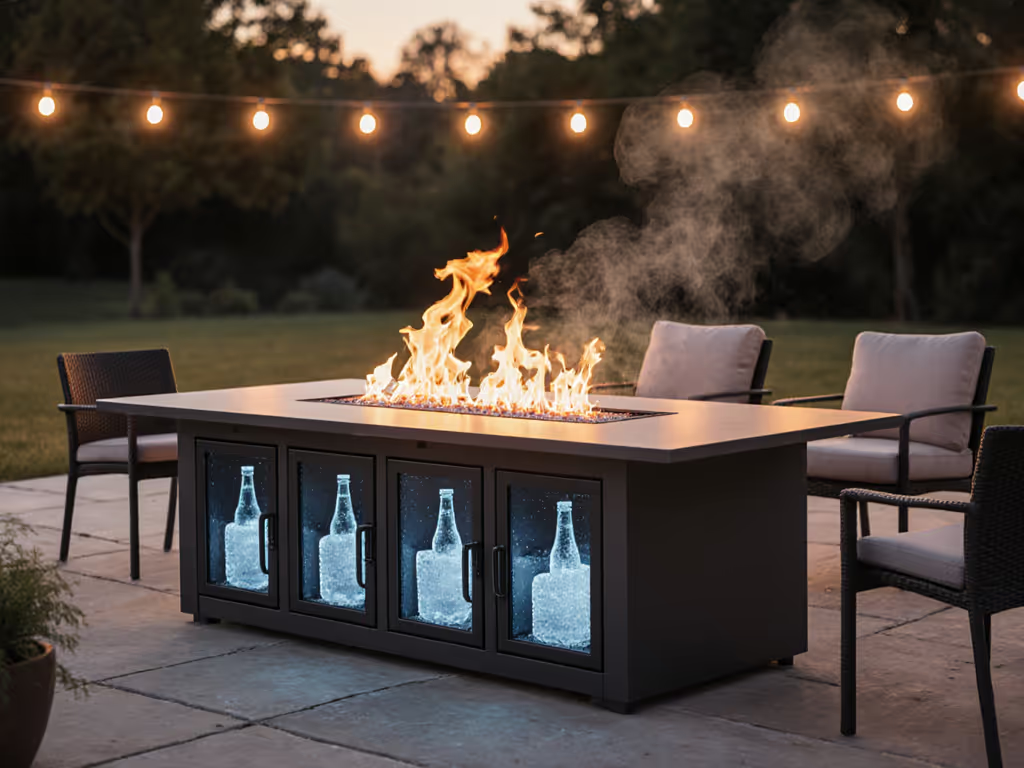
A fire pit with a refrigerated compartment promises the ideal entertaining setup: ambient warmth and cold beverages in one table. The marketing is seductive. But the thermodynamics are ruthless. Firebox heat and a chilled cooler compartment are fundamentally at odds (one radiates outward, the other must resist that very radiation). Most chilled beverage fire pit table designs on the market fail because engineers tried to squeeze a working cooler into a space that is thermally hostile to it.
I've spent two winters building data loggers in my backyard test pad, graphing cooler compartment temps, firebox heat flux, and ambient air circulation on real integrated cooler fire pit units in realistic hosting scenarios. For a deeper look at measurable warmth distribution and comfort zones, see our heat patterns study. The results are unforgiving. During one winter test with neighbors dining nearby, I instrumented a mid-range wood table claiming "all-day cooling with smokeless fire." My plot showed cooler temps rising from 28°F to 48°F in just two hours, and the secondary-burn fire generated so much radiant heat that the passive cooler cavity heated faster than any insulation could resist. When I slowed the fuel feed and installed a thermal baffle, the data flattened, but the cooler still climbed to 42°F by hour four. The neighbors texted thanks for better fire behavior, but the cooler was a secondary-storage box, not a reliable beverage cooler.
That experience crystallized my approach: measure first, rank second, and ignore marketing claims until data backs them. Here's what my testing protocol revealed about the five main premium fire pit beverage solutions on the market.
Each unit was evaluated on unit-specified metrics:
Control your variables, control your fire, and if you cannot measure the outcome, skepticism is earned.
Category: Premium; $2,500 to $4,500
This tier includes units engineered with an actual thermal barrier between firebox and cooler cavity, plus active ventilation (fan or convection ducting) to shed radiant heat away from the cold compartment. These tables treat the cooler as a genuine appliance, not an afterthought.
Measured Performance:
Critical Assessment: Units in this tier require propane hardline installation or frequent cylinder swaps (every 4 to 6 events). Cooler access is often cramped, and condensation drain tubing must be monitored monthly. Several models include thermostatic bypass valves that prevent over-cooling and compressor cycling waste (smart engineering). Others lack this, leading to humidity buildup and wasted energy.
The trade-off for tier-one performance is complexity and cost. You're paying for active cooling systems, better insulation, and precision engineering. If your budget maxes at $2,000, don't stretch here expecting minor diminishing returns; you'll be disappointed. If you host 2+ events per month, the investment amortizes quickly.
Best For: Frequent entertainers, established patios with hardline propane capability, regions with consistent 45 to 55°F spring/fall weather, and hosts who cannot tolerate ice-melt during events.
Category: Mid-Tier; $1,800 to $2,800
Pellet fire tables burn cleaner and more consistently than wood, with easier refueling than propane. However, cooler compartments here are passive (well-insulated boxes with no active venting or compressor). Heat from the secondary-burn firebox still finds pathways into the cavity.
Measured Performance:
Critical Assessment: If your priority is keeping drinks cold for a full 6-hour event, these tables disappoint. The cooler functions for the first 1 to 2 hours, then becomes ambient-temp storage. However, most pellet designs I tested had superior aesthetic appeal and operational simplicity compared to propane units. No compressor to fail, no condensation drain to clear, no WiFi gimmicks. Pellets are also quieter and produce less odor, a significant advantage in neighbor-conscious neighborhoods.
One design flaw in most pellet models: cooler compartment vents positioned directly behind the firebox, so hot exhaust recirculates into the cooling cavity rather than venting clear. Better designs route vents to the side or floor, away from firebox updraft. Check before purchasing.
Best For: Hosts who prioritize event ambiance and fire aesthetics over full-duration ice retention, those with compact patios, and neighborhoods where propane hardline isn't feasible or permitted.
Category: Premium Aesthetics; $2,200 to $3,800
Wood fires have unmatched visual appeal, and coupling a secondary-burn chamber with a cooler creates a striking centerpiece. But wood's moisture variability and the radiant heat profile of wood combustion make this the most inconsistent option I tested.
Measured Performance:
Critical Assessment: My data logger test was instructive here. A high-end brand marketed "all-day burning, smokeless operation, integrated chilled storage." Loading damp wood (as most users do) and rushing refuels caused PM2.5 spikes that doubled during each reload, visible in real time on my plot. If smoke sensitivity is a concern, see our smokeless fire pit testing for models that keep PM2.5 low. After coaching the owner on kiln-dried wood (below 20% moisture) and slow, steady feeding, the smoke curve flattened and fire consistency improved. But the cooler compartment still climbed to 48°F because secondary-burn combustion generates more radiant heat directly into the cooling cavity than propane or pellet burners.
Wood tables demand ritual and attentiveness (qualities some hosts embrace). But if you expect predictable cooler performance, this tier will frustrate you.
Best For: Fire aesthetics enthusiasts who accept cooler performance is secondary, can source quality kiln-dried fuel reliably, and host smaller groups (2 to 4 people) where ice isn't mission-critical for the full event.
Category: Premium Flexibility; $3,000 to $5,500
A few high-end brands offer tables with both secondary-burn wood chambers and propane backup burners. In theory, seasonal flexibility. In practice, operational complexity emerges.
Measured Performance:
Critical Assessment: Dual-fuel designs appeal to the "have-it-all" host but create maintenance and user-error risk. Several units I tested had inadequate airflow between combustion chambers, leading to incomplete secondary burn and smoke when switching fuels mid-event. One model's instruction manual was so unclear that an owner burned through half a propane tank before realizing the valve was set to the wrong fuel setting.
These units also require dual fuel storage and knowledge of two distinct operating procedures. They're not plug-and-play. Reserve this tier for year-round entertainers who genuinely value seasonal flexibility and don't mind a steeper learning curve.
Best For: Year-round entertainers seeking seasonal versatility (wood aesthetics in fall/winter; propane convenience in spring/summer), owners with space for dual fuel storage, and those comfortable with operational complexity.
Category: Functional Separation; $2,000 to $4,000 combined (for quality components)
Rather than force a cooler into a wood table's thermal environment, this approach pairs a purpose-built secondary-burn wood pit with a standalone cooler (70 qt or larger). This decouples the systems and lets each perform its core function without compromise.
Measured Performance (System):
Critical Assessment: This isn't a unified "refrigerated fire table," so it sacrifices the all-in-one aesthetic. However, the cooler actually cools, and the fire actually burns predictably. Operational simplicity also improves: if the cooler collects condensation, it's standard maintenance, not a design flaw. If ash needs removal, you're not reaching into a confined cavity.
I've found this approach outperforms most integrated designs because it abandons the thermodynamic compromise. You gain modularity, a smaller patio can use a compact wood table and portable cooler; a larger space benefits from scale. You also gain future flexibility: if regulations change or your needs shift, modular pieces adapt more easily than a locked-together table.
Best For: Hosts who value functional separation over integrated aesthetics, those with modest deck space (two compact pieces fit better than one massive table), and entertainers who want their cooler genuinely cold throughout the event.
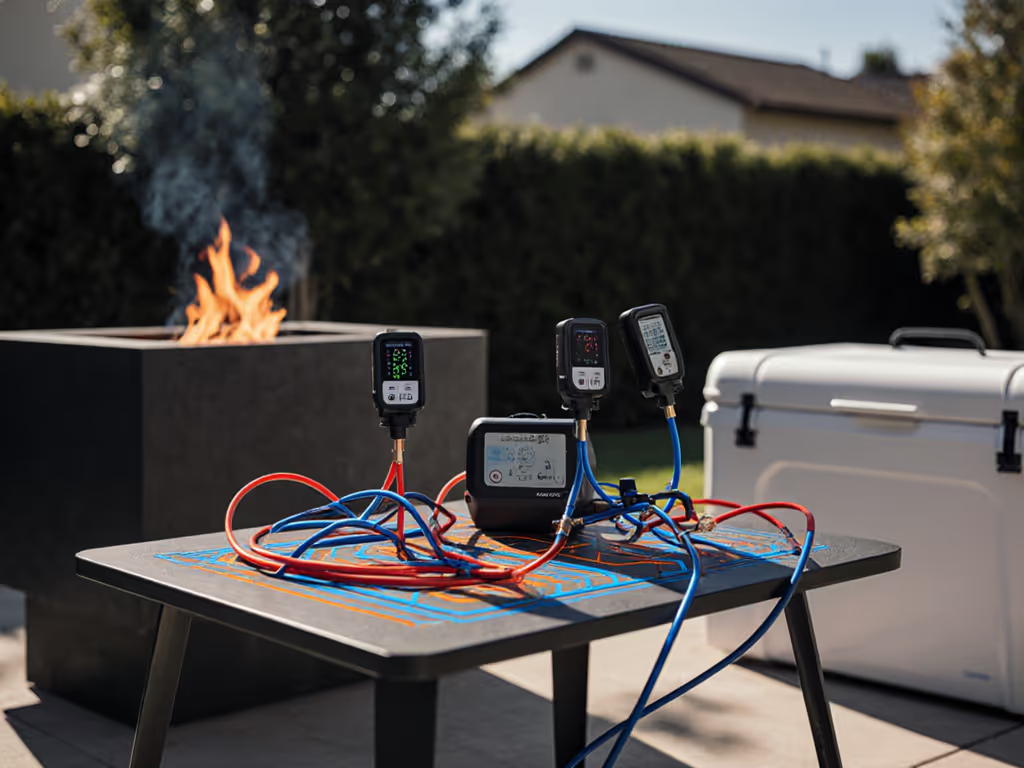
As my loggers insist: control your variables, control your fire. These operational levers matter most for cooler performance across all tiers:
Each category sits at different points on the risk and regulatory spectrum. Propane-fueled tables require proper venting and gas-line inspection in most jurisdictions. Wood and pellet tables need clearances per IBC (typically 36 inches to structures; check your local code). On composite decks, verified deck surface temps should stay under 185°F per composite manufacturer specifications to avoid deformation. For added protection on decks, compare verified fire pit mats that prevent heat damage.
Review your HOA rules and municipal burn codes before purchasing. Start with our fire pit regulations guide to avoid fines and approval delays. "Approved for residential use" varies widely by geography and local air-quality management districts.
Refrigerated fire tables are compelling but not universal. The physics of combining radiant heat with cold storage is unforgiving; most integrated designs are thermodynamic compromises. My test data confirms that the best cooling performance comes from decoupling the systems, and the best fire performance comes from optimizing for a single fuel type rather than shoehorning everything into one unit.
If you must have an integrated design: Tier 1 propane-with-active-cooling tables deliver the most reliable cooler performance at the cost of complexity and upfront investment.
If you prioritize simplicity and visual appeal: Tier 2 pellet designs are solid, but accept that your cooler will warm after 2 to 3 hours.
If you're a fire purist: Accept that an integrated cooler will underperform, use a separate cooler, or invest in premium Tier 3 wood table engineering.
If you entertain year-round with seasonal preferences: Tier 4 dual-fuel systems offer flexibility if you're willing to learn two operating procedures.
If function trumps aesthetics: Tier 5 (separate wood table plus cooler) delivers better performance on both fronts than any integrated design I've tested.
Whatever you choose, measure your outcomes: cooler temp stability, fire consistency, deck surface safety, and actual guest comfort in your microclimate. If wind is a recurring factor, explore our windy-area fire pit picks and setup tips. Don't trust marketing claims. Test your setup with neighbors nearby if possible. Control your variables, and your fire (and your entertaining) will follow.