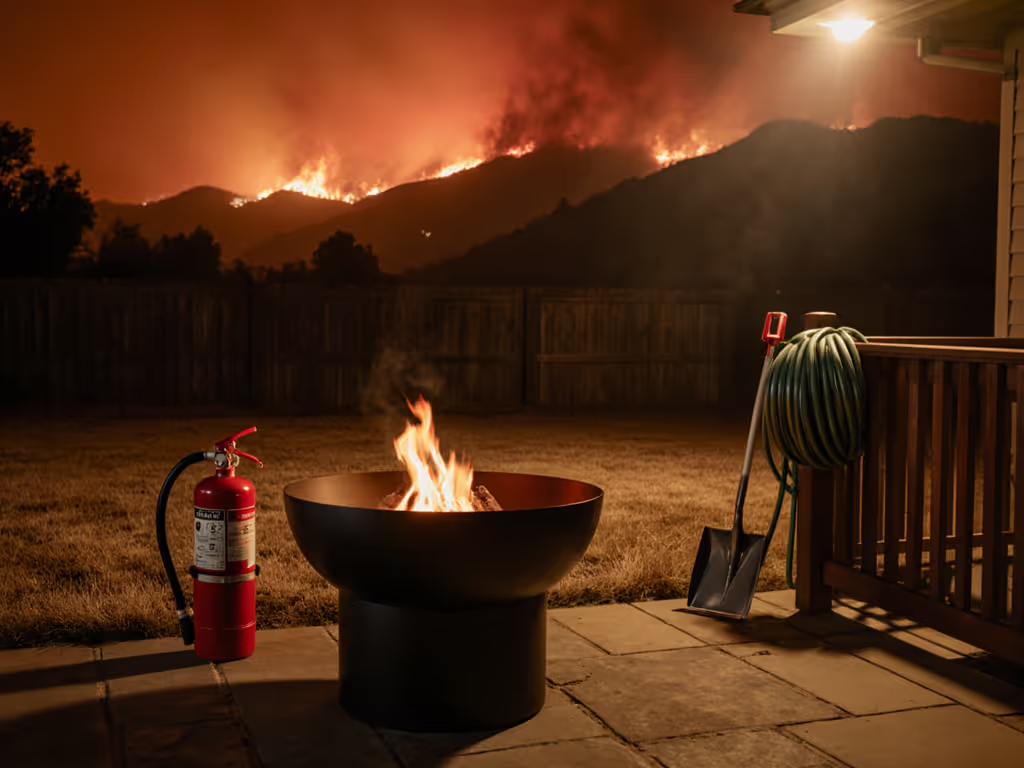
Fire Pit Emergency Protocols for Wildfire Zones
By Amina Diallo • 27th Feb
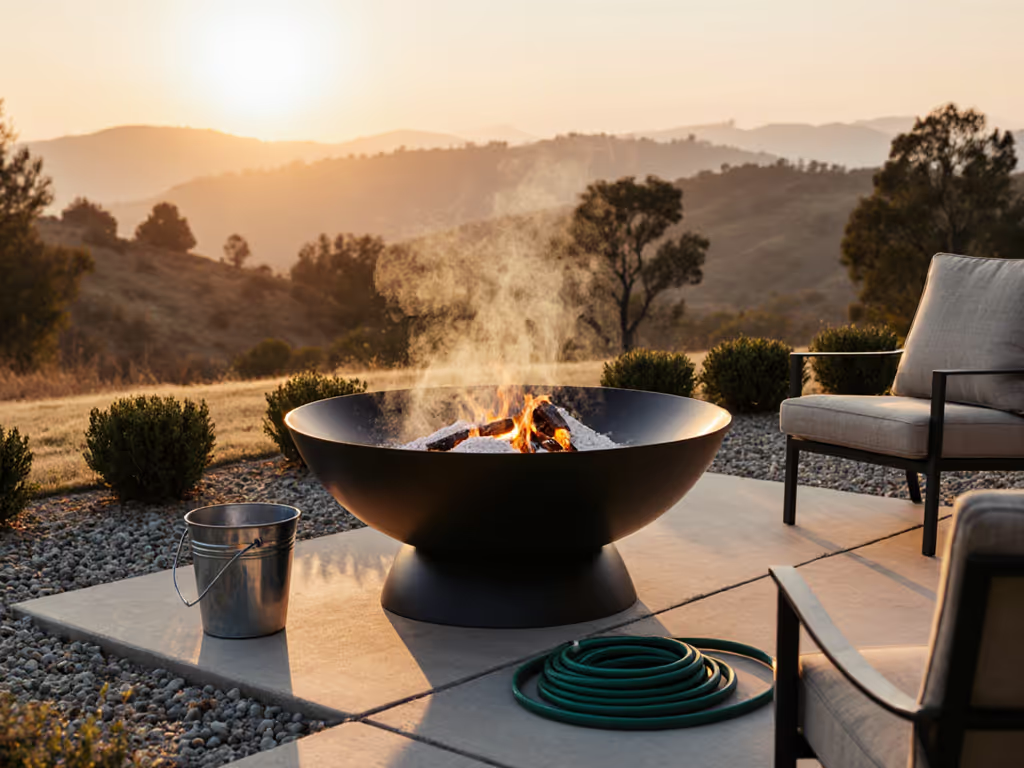
Square fire pits and other backyard burners require specific emergency shutdown and positioning protocols when you live in a wildfire zone. If you're in a region where wildfire season is part of your calendar, the difference between a thoughtful, compliant setup and a regulatory headache, or worse, an actual safety risk, comes down to knowing when to stop burning and how to position your fire feature so it doesn't become a liability to your neighbors or community.
Below are the critical questions every homeowner in a wildfire zone should answer about their fire pit emergency protocols.
FAQ: Fire Pit Operation in Wildfire-Prone Areas
1. When Must I Shut Down My Fire Pit if a Wildfire Is Nearby?
The moment a local authority issues an evacuation order or a mandatory burn ban, your fire pit must be extinguished. Do not wait for a follow-up notice. Here's the sequence:
-
Monitor alerts continuously. Download the FEMA app and enable real-time alerts from the National Weather Service for your area. Many communities also operate Wireless Emergency Alert (WEA) systems that push notifications automatically (no sign-up required).
-
Shut down before your community goes on high alert. If air quality indexes (AQI) spike or evacuation warnings (not yet orders) are issued, treat that as a cue to suspend recreational burns. Even if it's legal, the visual and olfactory evidence of your fire can trigger neighbor anxiety and community friction when fear levels are high.
-
Document your last burn. Note the date and weather conditions. This log is useful if an authority questions recent burn activity at your address.
Cleaner burns travel farther than apologies and air purifiers.
Proactive shutdown isn't just compliance. It is a form of neighbor consideration. A neighbor watching smoke rise during evacuation warnings will remember it; a neighbor who sees your fire pit cold will appreciate the restraint.
2. How Should I Position My Fire Pit Relative to Defensible Space and Structures?
Your fire pit must exist within, not outside, a broader defensible space strategy. This is where the geometry gets critical.
The 30-foot primary zone around your home should be cleared of vegetation and combustible debris. Within this zone, your fire pit must be positioned at least 10 feet away from your home, siding, railings, overhanging eaves, and anything else that can burn (including propane tanks, deck surfaces, mulch beds, and composite deck boards that can scorch or char under sustained heat exposure).
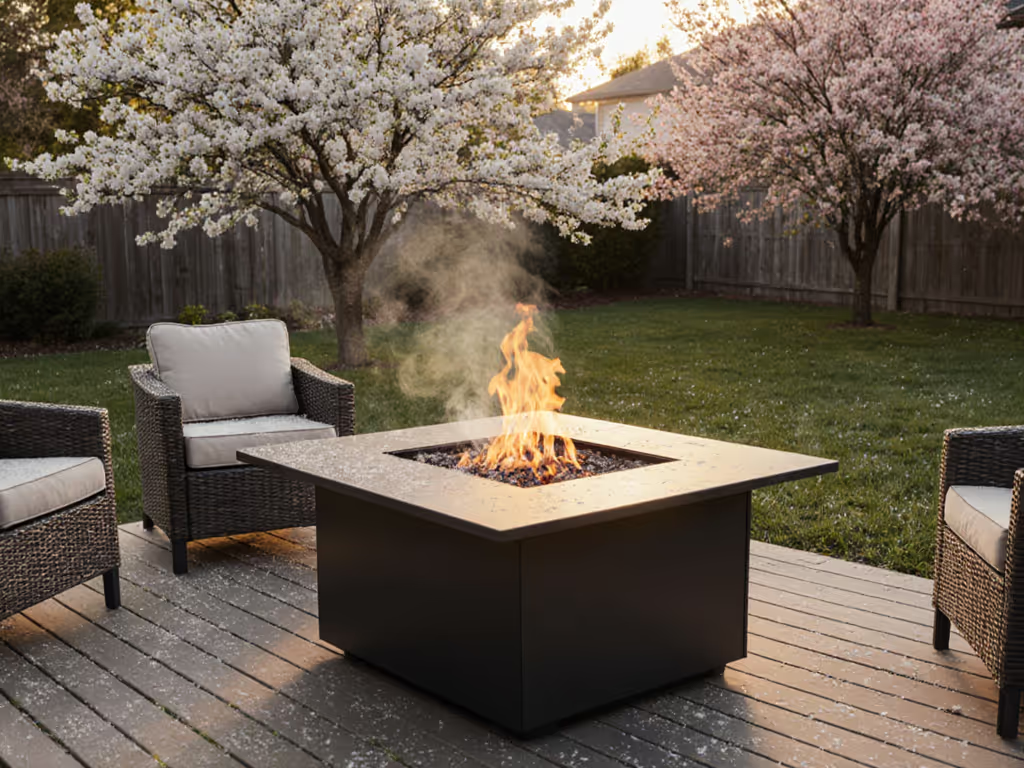
For square fire pits specifically, the footprint matters. A square pit with one-meter sides, operated on a composite or wood deck, will radiate heat across a 3 to 5 meter radius depending on ambient temperature and wind. Center your pit at a minimum 10 feet from structural elements, and verify that radiant heat (measured with a non-contact thermometer) does not exceed 60°C (140°F) on deck surfaces or railings during a 2-hour burn. Decks that exceed manufacturer heat tolerances will void warranties and create scorch marks that reduce resale appeal.
The secondary 70-foot zone is less about your fire pit and more about the broader vegetation profile of your property. Beyond 30 feet, maintain moderate tree spacing and remove dead branches. This reduces the speed at which an approaching wildfire can reach your structure, which is critical for responders to defend your home if evacuation isn't possible.
3. What Fire Pit Modifications Make Emergency Shutdown Faster and Safer?
Modifications to square fire pits that materially improve emergency readiness include:
-
Removable grates or screens. Standard square fire pits with fixed grates trap ash and require cool-down time before you can move the unit. Grates that lift out allow you to extinguish and ventilate the pit rapidly, cutting cool-down from 30 minutes to 10.
-
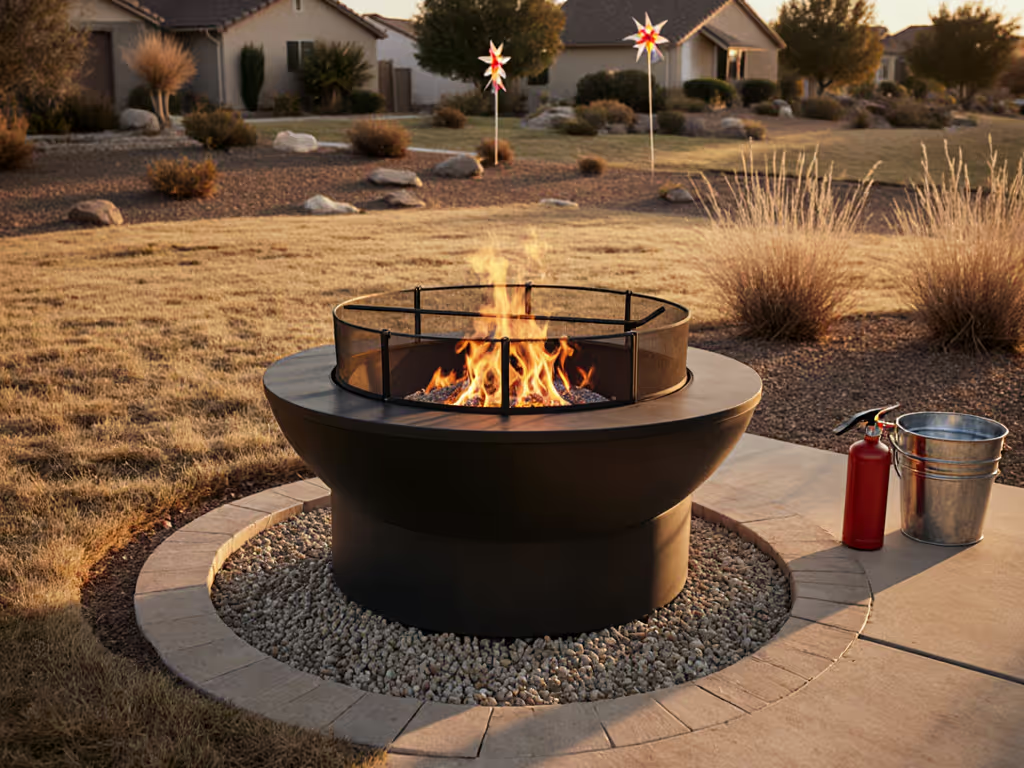
Metal or ceramic lids. A tight-fitting lid starves the fire of oxygen and accelerates extinguishment. Keep it accessible; a lid buried in storage is useless in an evacuation scenario.
-
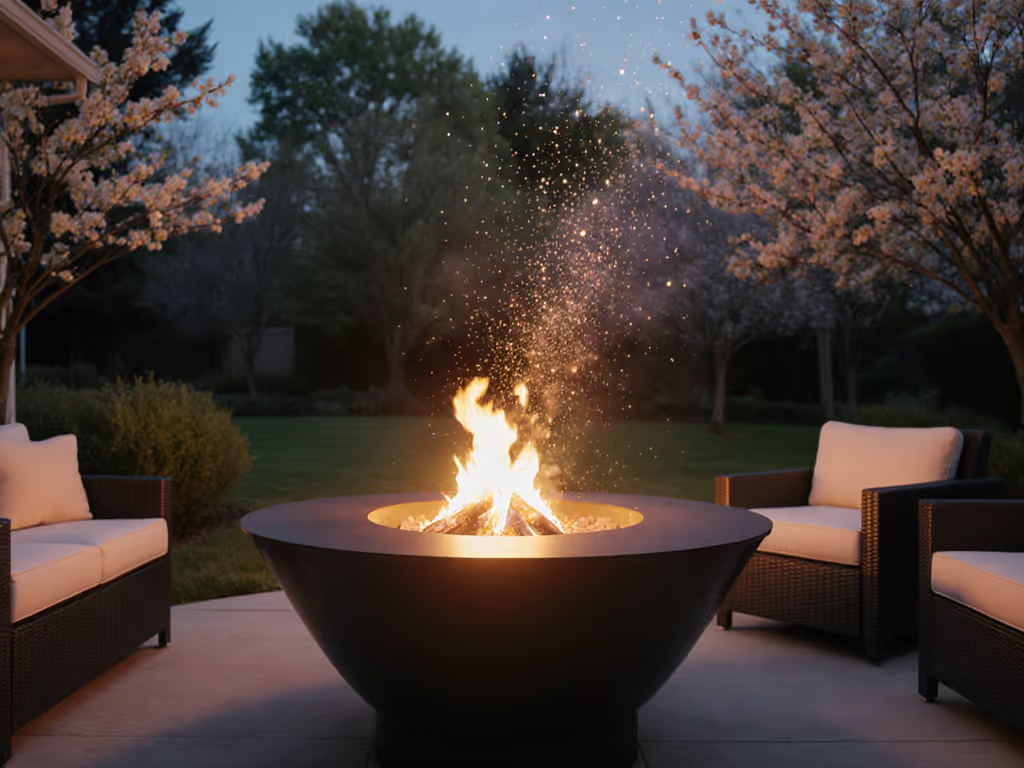
Spark arrestor screens. These fine-mesh screens prevent flying embers from escaping. In high-wind or red-flag days, they reduce the risk of your fire pit contributing to spot fires downwind, which is a neighbor harmony and liability issue. For wildfire-season best practices on fuel choice, ember control, and ash management, see our wildfire-zone burning guide.
-
Ash disposal containers. Pre-positioned metal containers (never plastic or cardboard) allow you to shovel hot ash without hesitation during shutdown. Wet ash in a metal pail cools safely; ash left in the pit extends cool-down and creates cleanup friction.
These modifications are not about luxury. They are mitigation sequences that compress the time between "alert received" and "fire pit safe for evacuation." In a 30-minute warning window, the difference between a slow shutdown and a 5-minute one is the difference between leaving with peace of mind and leaving in a panic.
4. How Do I Operate My Fire Pit Responsibly During High AQI Days or Pre-Evacuation Periods?
Air quality is the overlooked dimension of fire pit safety in wildfire zones. Smoke from a residential fire pit contributes to local PM2.5 (particulate matter ≤2.5 micrometers) and can travel up to 100 meters on a typical breeze, directly into neighbors' homes, cars, and lungs.
When air quality is degraded (AQI > 100) or wildfire smoke is already visible in your region:
-
Do not burn. A neighbor with asthma or COPD is already struggling to breathe. Your discretionary fire pit is not worth exacerbating their condition or forcing them to run air purifiers 24/7. Research from low-cost sensor networks confirms that even "smokeless" wood pits release significant PM2.5 when ambient conditions are already poor or when wood moisture is above 20%. If smoke sensitivity is a concern, our smokeless fire pits guide for sensitive users explains which designs perform best in real-world testing.
-
If you must burn, operate at minimal fuel load. Smaller fires = less smoke, easier control, faster extinguishment. A half-log burn is still a burn; it just won't trigger complaints.
-
Monitor wind direction. Position yourself upwind of neighboring structures. A square fire pit on an open patio is more flexible than one in a courtyard. Courtyards channel smoke and create recirculation, so avoid them during sensitive periods.
-
Track fuel moisture. Wet wood smolders and produces far more smoke than dry wood. Only burn seasoned firewood (12 to 18 months old, stored under cover). This is a simple cause-to-effect relationship: drier fuel = cleaner burn = fewer neighbor complaints and less PM2.5 in the downwind zone.
5. What Is My Evacuation Readiness Checklist Specific to a Fire Pit Setup?
If you operate a fire pit in a wildfire zone, your family evacuation plan must account for it.
-
Pre-evacuation prep steps: Extinguish your fire pit at least 1 hour before an anticipated evacuation alert. This ensures the pit is cool enough to leave unattended and prevents it from becoming a secondary ignition source if you must evacuate quickly.
-
Fuel and tank isolation: If you use a propane tank, ensure the valve is closed and secured to a fixed point (to prevent tipping during evacuation chaos). Tank removal is not necessary; propane does not ignite on its own. A closed, stable tank is one fewer thing to worry about if you're leaving in a hurry.
-
Document your setup. Take photos of your fire pit, its position relative to structures, and the defensible space around it. Include these in your insurance file. For coverage implications and documentation tips, read our fire pit and home insurance guide. If your home is damaged and a claim is questioned, photographic evidence that you operated the pit at a safe distance from structures and kept the zone clear helps your case.
-
Communicate with neighbors. During fire season, a brief, friendly note or conversation about your fire pit practices — "I only use seasoned wood, operate only in calm wind, and shut down if AQI spikes" — neutralizes concerns. Transparency builds trust. Cleaner by design, not by accident.
-
Identify a meeting point. Evacuations are chaotic. If you have guests at your fire pit and an alert comes through, everyone needs to know where to rendezvous outside your neighborhood. Practice this with household members and regular guests.
Moving Forward
Fire pit operation in wildfire zones is not forbidden, it's conditional. Your setup, fuel quality, emergency protocols, and neighbor consideration determine whether your fire pit is an asset or a liability. The data is clear: well-maintained community fire pit safety starts with positioning within defensible space, fuel moisture control, and a shutdown protocol you can execute in 10 minutes or less.
For more detail, review your local fire authority's guidelines (your city or county fire department website), download the FEMA Wildfire Preparedness checklist, and (if you're uncertain whether your setup meets code) request an informal site visit from a local fire marshal. Most are willing to offer feedback, and that conversation can save you from a citation or, worse, a tragedy.
Your fire pit should enhance your home, not burden your peace of mind or your neighbors' lungs.
Related Articles